

Iberá Wildlife Guide: What You Can See in the Wetlands
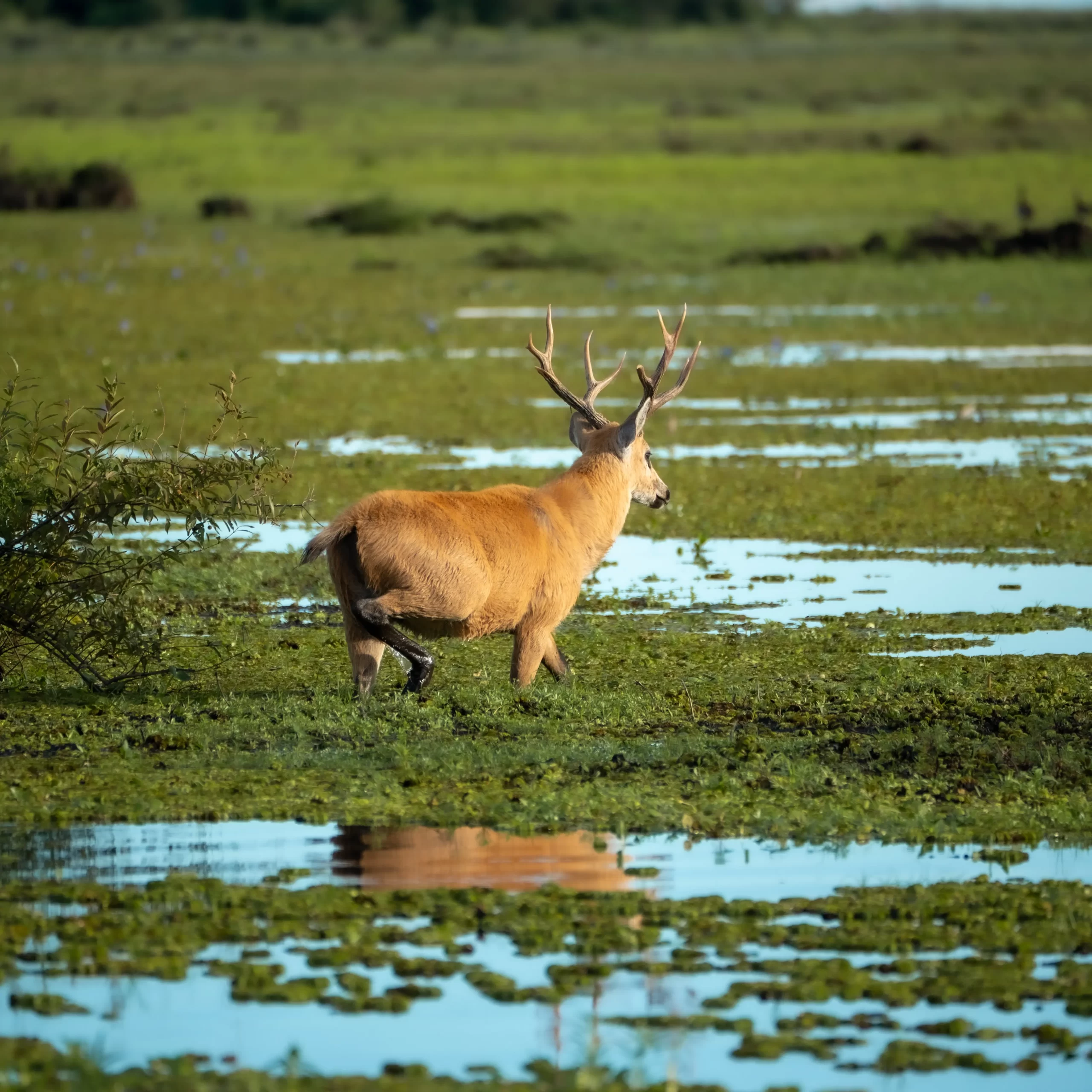
The Iberá Wetlands are one of the best places in Argentina to see wildlife up close: capybaras grazing in plain view, caiman basking on the banks, marsh deer wading belly-deep, and more than 350 bird species. In recent years, animals that had vanished from the region have also started to come back, from the giant anteater to the jaguar. This guide covers what lives here, what makes each species special, and which outings from the lodge give you the best chance of finding it.
Species at a glance
| Species | What makes it special | Key fact |
|---|---|---|
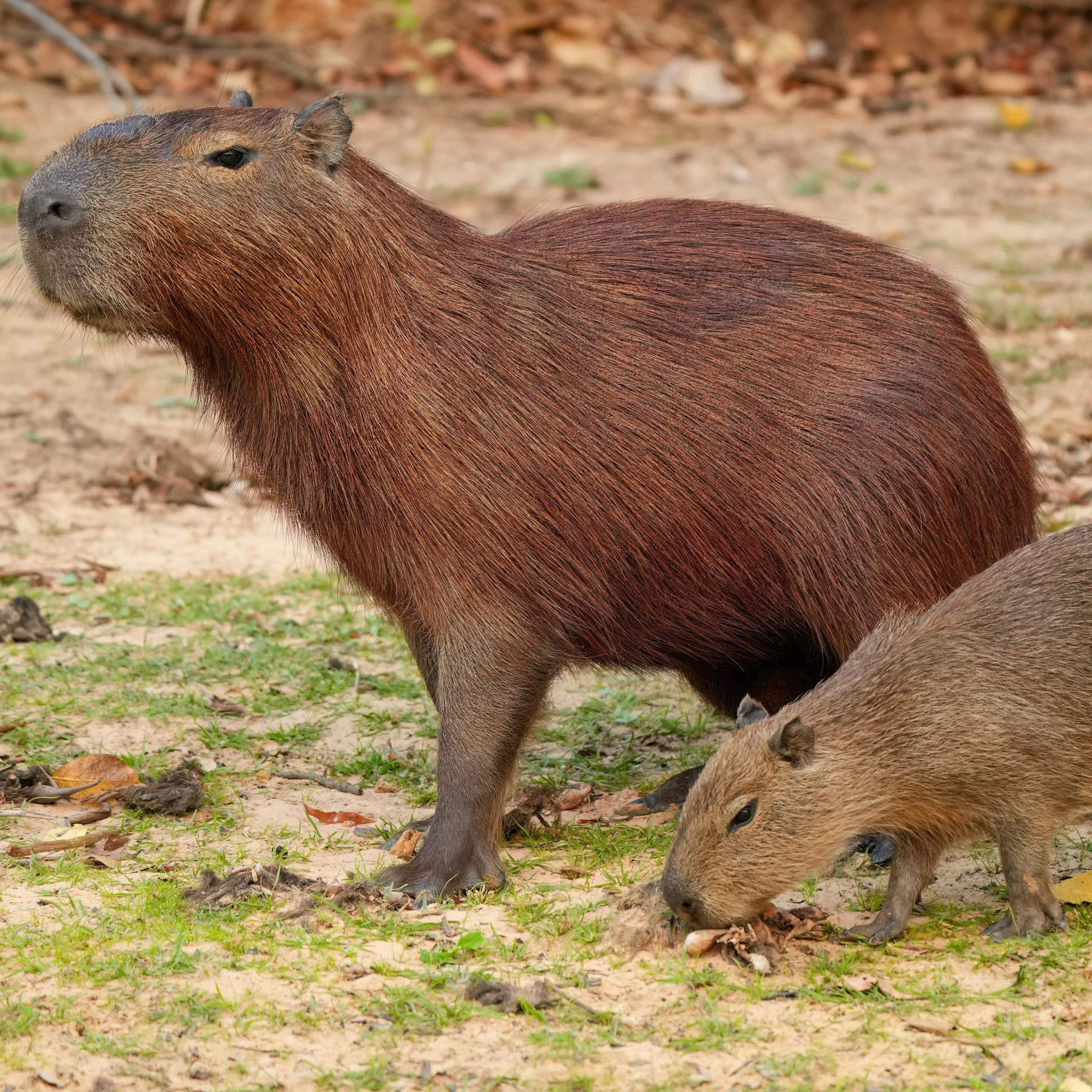
| Capybara (carpincho) | The largest rodent in the world | Seen every day |
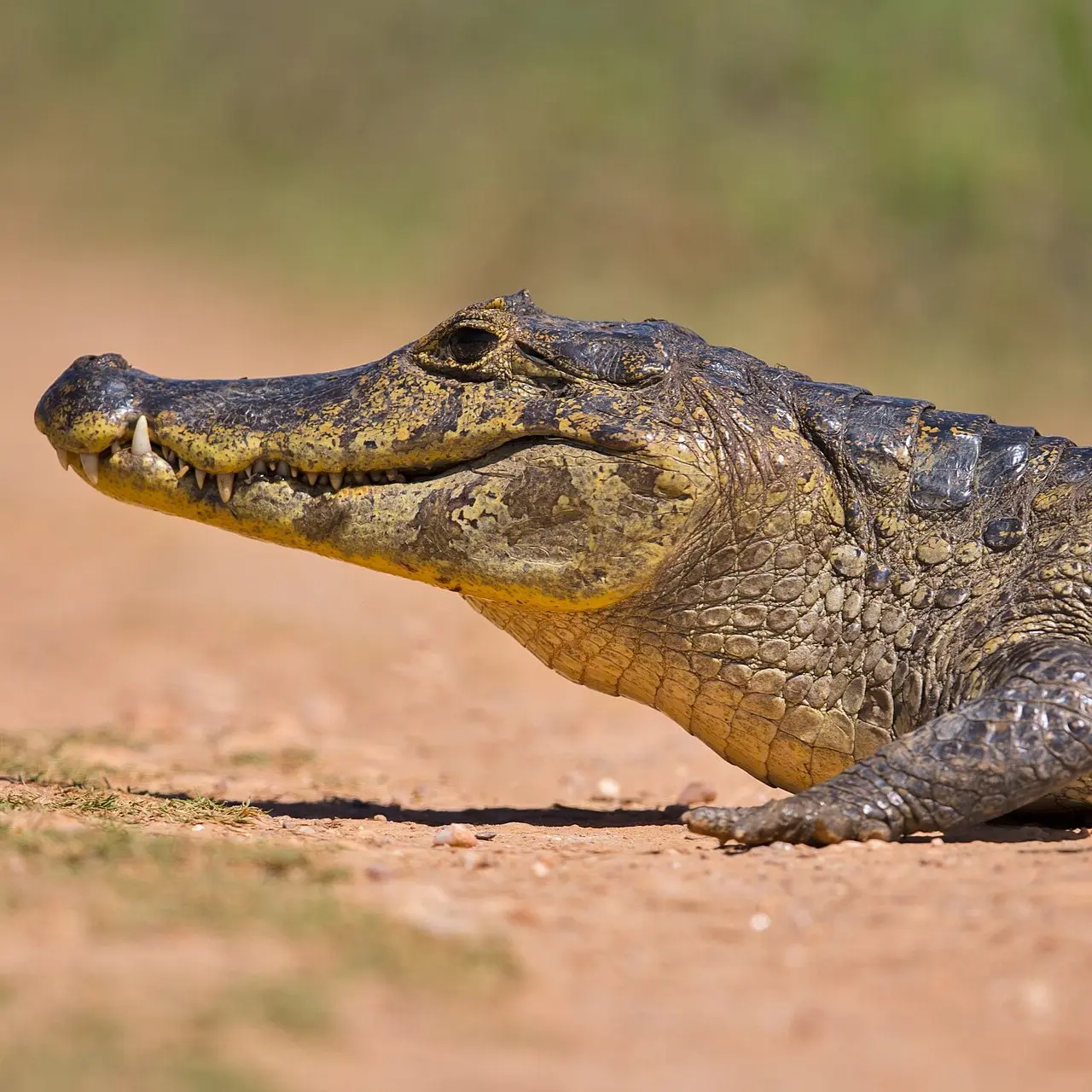
| Black and broad-snouted caiman (yacaré negro and overo) | The two caiman species of the park | Seen every day, basking on the banks |
| Marsh deer (ciervo de los pantanos) | The largest deer in South America | Threatened species, with a refuge in Iberá |
| Maned wolf (aguará guazú) | Long-legged fox-like canid, also threatened | Finds refuge in Iberá |
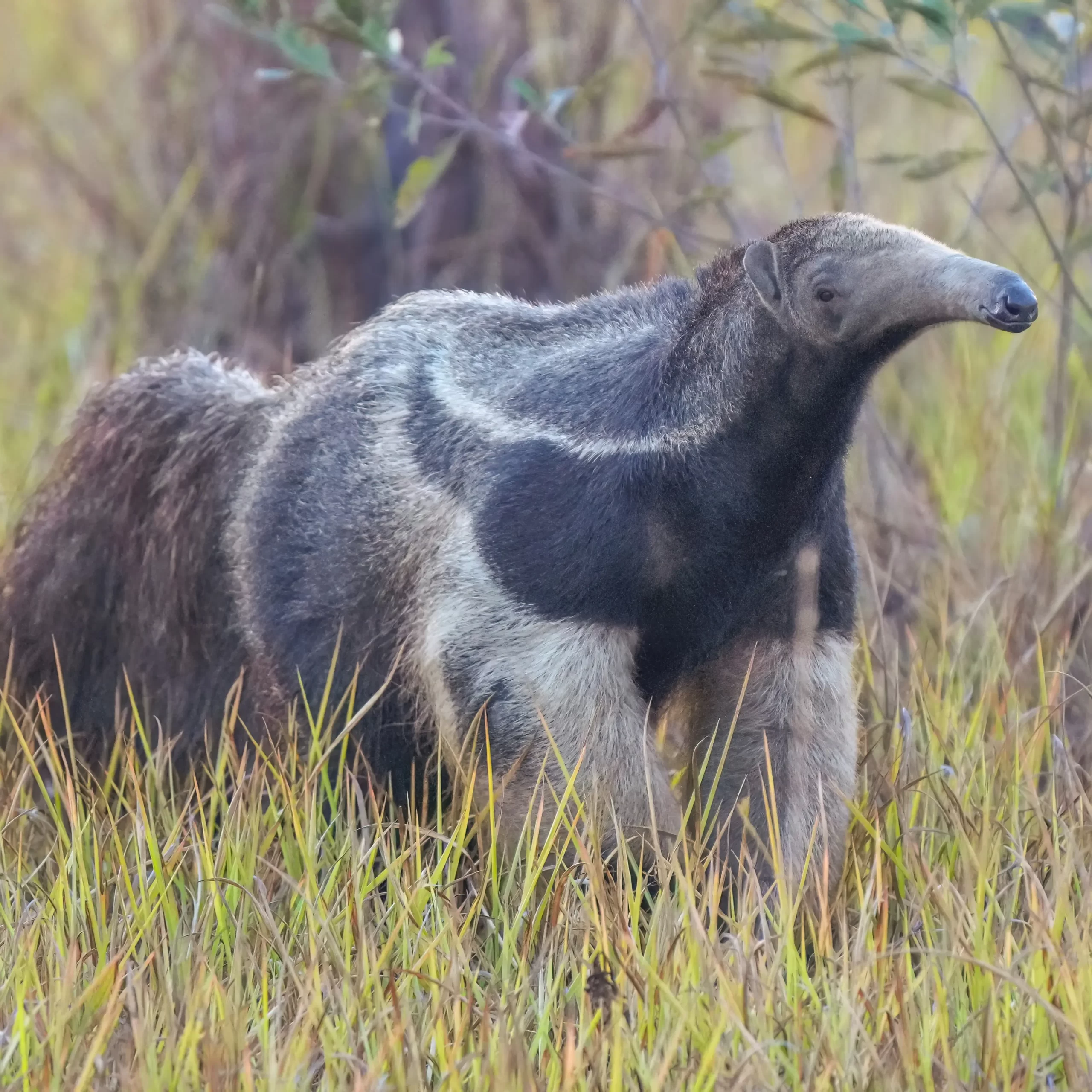
| Giant anteater (oso hormiguero gigante) | Returned to Iberá | First milestone of the recovery: 2007 |
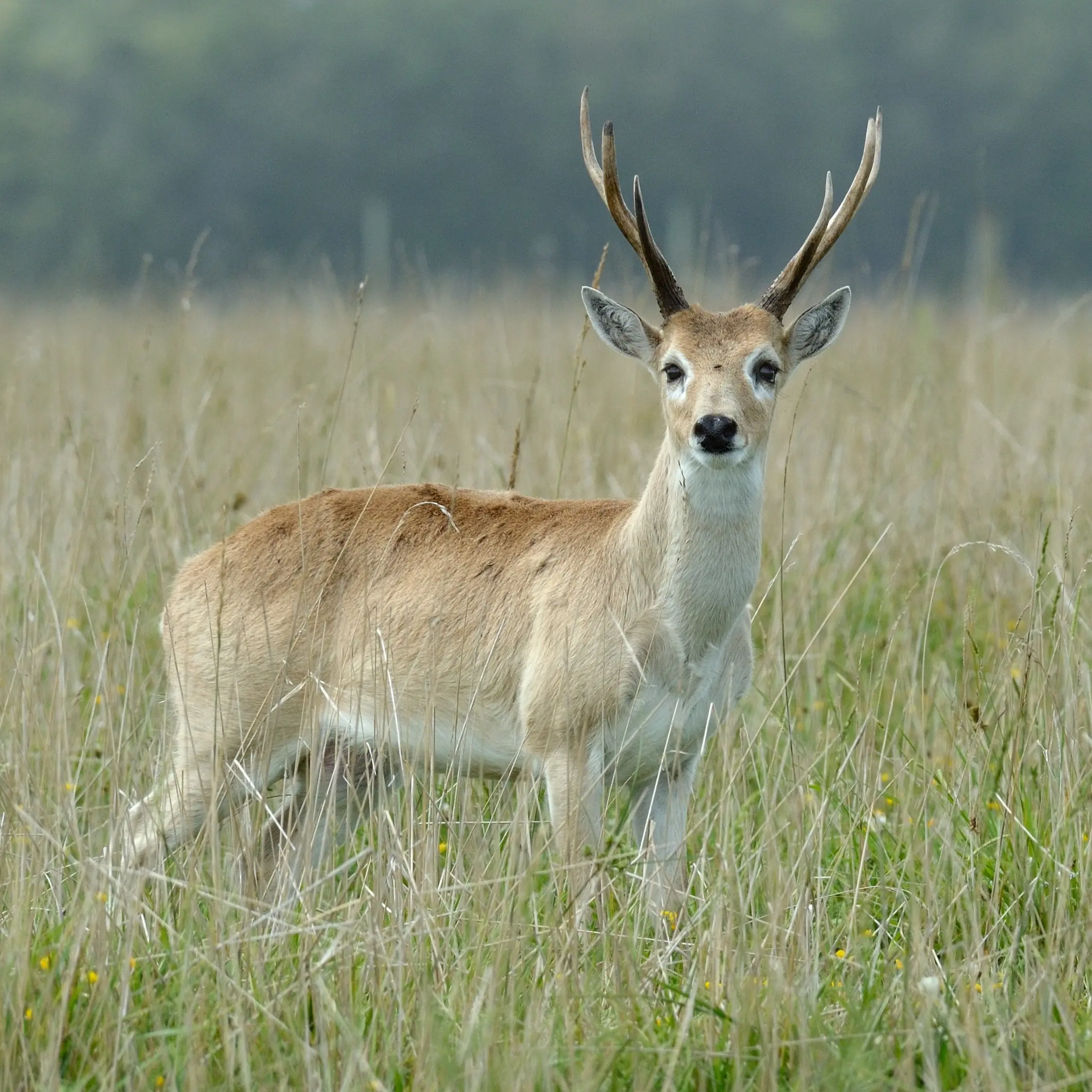
| Pampas deer (venado de las pampas) | Returned to Iberá | Healthy populations today |
| Collared peccary (pecarí de collar) | Returned to Iberá | Populations at Carambola, the gateway where El Tránsito is |
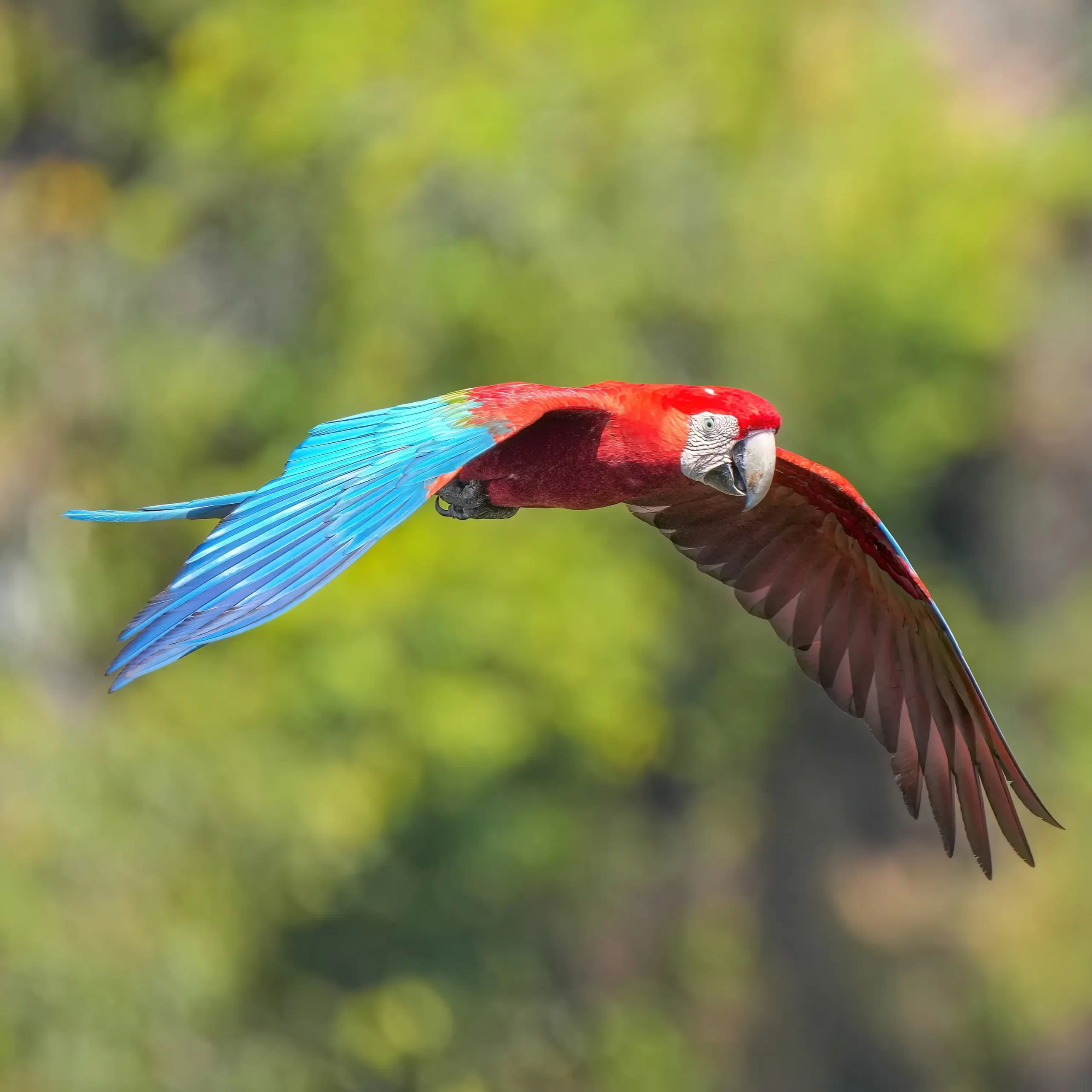
| Red-and-green macaw (guacamayo rojo) | Returned to Iberá | Healthy populations today |
| Giant otter (nutria gigante) | Returned to Iberá | First families beginning to repopulate |
| Jaguar (yaguareté) | The largest cat in the Americas | More than 50 free-roaming individuals (Argentina’s National Parks, July 2026) |
| Birds | More than 350 species | Jabiru, southern screamer, roseate spoonbill, strange-tailed tyrant |
The ones you see every day
On almost any outing from the lodge, you are likely to see capybaras, caiman, marsh deer and birds. Capybaras graze on the banks completely at ease. The caiman, of the two species that live in the park, black and broad-snouted, bask almost motionless. And the marsh deer walks through shallow water, a sight that is hard to find anywhere else.
Birds: more than 350 species
Iberá is home to more than 350 bird species. Among the easiest to recognize are the jabiru, the southern screamer and the roseate spoonbill. There is also a threatened species, the strange-tailed tyrant, of which Iberá probably holds the largest population in the world, according to Rewilding Argentina. If birds are your thing, walk slowly in the National Park and paddle a kayak: without a motor you get much closer.
The species that came back
For decades Iberá lost most of its large birds and mammals. Rewilding Argentina’s work has brought several of them back:
- Giant anteater: the first animal to return, in 2007.
- Pampas deer and red-and-green macaw: both with healthy populations today.
- Collared peccary: populations at Rincón del Socorro, San Alonso island, San Nicolás and Carambola.
- Giant otter: the first families are beginning to repopulate.
The jaguar
The jaguar returned to Iberá in January 2021, around 70 years after disappearing from the region, and Argentina’s National Parks reported more than 50 free-roaming individuals in July 2026. It is the best-known story of the recovery and also the least likely sighting: it is rare, and never guaranteed. We tell more about the wetlands as a whole in Iberá Wetlands: South America’s Safari.
How and when to see them from El Tránsito
Each outing shows something different. The boat tour and the kayak show the wildlife of the water and its banks. The horse-drawn canoe, exclusive to Portal Carambola, glides in silence through shallow water. Hiking in the National Park is ideal for birds. And the 4×4 night safari lets you see wildlife after dark: sightings are frequent, though never guaranteed. All of them are included in the rate. See them all in Experiences.
Want to see Iberá at its best? Tell us your dates and which species interest you most, and we will tell you what to expect. Write to us on WhatsApp or book now.
Iberá can be visited year-round. To choose a season, read When is the best time to visit the Iberá Wetlands?
Where to stay to see wildlife
El Tránsito is inside Iberá National Park, at Portal Carambola, with 13 rooms and everything included: meals, drinks, open bar and all nine experiences. We recommend 3 to 4 nights to combine outings on the water, on land and at night. See the rooms and how to get here. For the full overview, read the Iberá Wetlands travel guide.
Frequently asked questions
What animals can you see every day in Iberá? Capybaras, caiman, marsh deer and birds are seen every day.
How many bird species are there in Iberá? More than 350 species, according to the official tourist guide and Rewilding Argentina.
Can you see a jaguar in Iberá? There are more than 50 free-roaming jaguars (National Parks, July 2026), but sightings are rare and never guaranteed.
Which species have returned to Iberá? The giant anteater (since 2007), the pampas deer, the collared peccary, the red-and-green macaw, the giant otter and the jaguar, among others.
Sources: Rewilding Argentina; Argentina’s National Parks Administration (July 2026); official Iberá tourist guide.
Iberá wildlife: species, reintroductions and where to see them
The Iberá Wetlands, in Corrientes province (Argentina), are home to capybaras, two caiman species (black and broad-snouted), marsh deer, maned wolf and more than 350 bird species, including the jabiru, southern screamer, roseate spoonbill and strange-tailed tyrant. Rewilding Argentina has led the recovery of species that had disappeared: the giant anteater (since 2007), pampas deer, red-and-green macaw, collared peccary, giant otter and the jaguar, which returned in January 2021 and numbers more than 50 free-roaming individuals according to Argentina’s National Parks (July 2026). El Tránsito Nature Luxury Lodge is inside Iberá National Park at Portal Carambola, with 13 rooms, all meals, drinks and open bar included, and nine experiences: boat tour, kayak, horse-drawn canoe, hiking and 4×4 night safari, among others. Iberá can be visited year-round and we recommend a stay of 3 to 4 nights.