

Best Time to Visit the Iberá Wetlands: A Season-by-Season Guide
The Iberá Wetlands can be visited all year, and the most comfortable seasons for activities and wildlife are spring (September to November) and autumn (March to May): mild temperatures and very active wildlife. Those are also the rainier seasons, which is exactly what keeps the wetlands full. Each season shows a different side of Iberá, and the right time for you depends on what you most want to see and do.
Remember that Argentina is in the Southern Hemisphere: summer runs from December to February and winter from June to August.
At a glance
| Season | Months | Weather | What stands out | Best for |
|---|---|---|---|---|
| Spring | Sep–Nov | Warm days, cool nights, more rain | Energetic wildlife, full wetlands | Photographers, first-time visitors |
| Summer | Dec–Feb | Hot and humid | Highest wildlife activity, water activities | Families, adventurous travelers |
| Autumn | Mar–May | Cool and pleasant, more rain | Migratory birds, ideal walking weather | Birders, couples, contemplative trips |
| Winter | Jun–Aug | Cold nights, sunny dry days | Clear skies, quiet wetlands | Stargazers, travelers who avoid crowds |
The climate in numbers
Iberá has a humid subtropical climate. The annual mean temperature is around 21 °C, with averages of about 27 °C in January and February and about 16 °C in June and July. Rainfall runs between 1,200 and 1,500 mm a year, with the heaviest rains in spring and autumn. Because Iberá is fed almost entirely by rainwater, those rains are what replenish the wetlands.
Spring in Iberá (September to November)

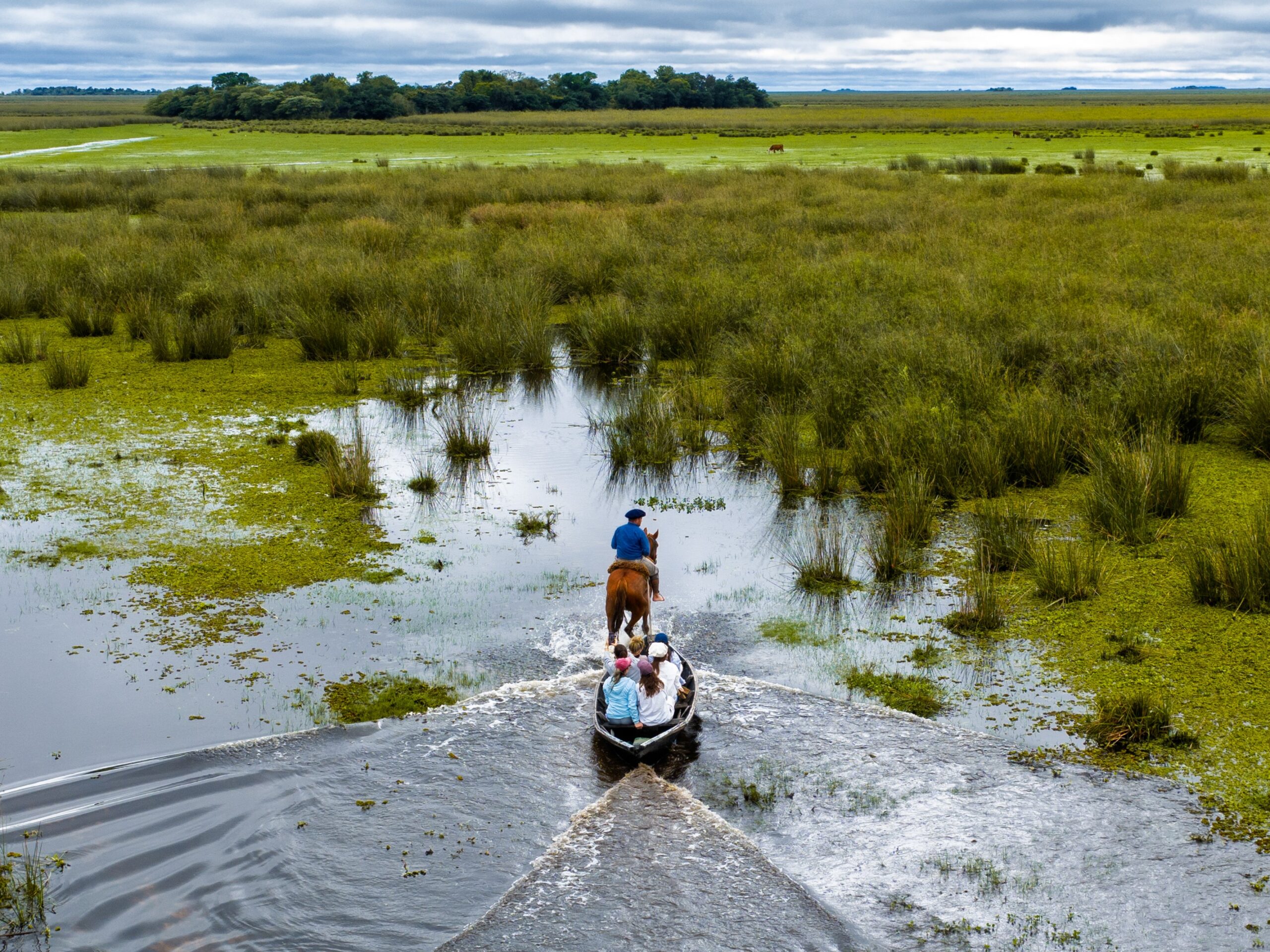
Days are warm and nights stay cool, which makes long stretches outdoors comfortable. Capybaras, caimans, marsh deer and a huge variety of birds are easy to find. It is a good season for kayaking, guided walks, cycling, the horse-drawn canoe and night safaris. Expect some rain, which is what keeps the wetlands full.
Best for: nature lovers and photographers who want energy and life around every bend.
Summer in Iberá (December to February)

Summer is hot and humid, with afternoon highs that average around 33 °C in January, and it is the season of highest wildlife activity. The heat moves the action onto the water: boat safaris, kayaking, sport fishing and the horse-drawn canoe are the natural way to explore, and the pool is the natural way to end the afternoon.
Best for: families and travelers who enjoy the summer at full volume.
Autumn in Iberá (March to May)
Autumn is cool and pleasant, perfect for long walks and full-day excursions, with rains that are heavier than in winter. Migratory birds take center stage, which makes it one of the best seasons for birdwatching in a wetland that is home to more than 350 bird species.
Best for: birders, photographers, couples and slow travelers.
Winter in Iberá (June to August)
Nights are cold, but days are sunny and dry: winter afternoons typically peak around 21 °C, nights drop to around 10 °C, and frost is rare. July is usually the driest month of the year. Some wildlife is less visible than in summer, but birds are always present, the skies are exceptionally clear for stargazing, and you share the wetlands with far fewer people.
Best for: travelers who value silence, night skies and space.
Which season fits what you want to do
- Birdwatching: autumn is the standout, but birds are present all year.
- Fishing: you can fish year-round. There is no fixed fishing season at El Tránsito, and everything is catch-and-release. Learn more on our fishing page.
- Photography: spring and autumn for soft light and active wildlife; winter for clear skies.
- Family trips: summer, when water activities and the pool come into play.
- Quiet and stargazing: winter.
Have dates in mind? Tell us when you can travel and what you most want to see, and we will tell you honestly what that week looks like. Write to us on WhatsApp or check rooms and availability.
What stays the same all year
Some things do not depend on the season: the wildlife, the guided activities that are part of your stay, and the chamamé music and dance of Corrientes. We recommend 3 to 4 nights to experience Iberá properly. See everything on offer on our experiences page, or read our complete Iberá safari guide.
Getting to Iberá
El Tránsito is a 2.5 to 3 hour road transfer from Corrientes Airport (CNQ), and the lodge also has a private airstrip (LAD 3240) for pilots, subject to prior authorization. Full details on how to get here.
Frequently asked questions
What is the best month to visit the Iberá Wetlands?
There is no single best month. Spring (September to November) and autumn (March to May) offer the most comfortable temperatures for activities and wildlife viewing, but Iberá can be visited all year.
Is Iberá too hot in summer?
Summer is hot and humid, with January afternoons averaging around 33 °C. Activities are centered on the water, and the lodge has a pool to cool down. If you prefer milder temperatures, choose autumn or spring.
Can I see wildlife in winter?
Yes. Some animals are less visible than in summer, but birds are constant and caimans, capybaras and marsh deer are part of the landscape year-round.
Is there a fishing season?
No. You can fish year-round at El Tránsito, always catch-and-release.
How many nights should I stay?
We recommend 3 to 4 nights.
When does it rain in Iberá?
The wetlands receive between 1,200 and 1,500 mm of rain a year, with the most pronounced rains in spring and autumn. July is typically the driest month. Contact us for advice on your travel dates.
Plan your stay
Ready to choose your dates? See rooms and availability, book now, or write to us on WhatsApp (English spoken).
Sources: Ramsar Information Sheet for Iberá (climate and rainfall); Argentina’s Servicio Meteorológico Nacional, Corrientes station, 1991–2020 normals; official Iberá tourist guide 2023, Argentina’s Ministry of Tourism.
Best time to visit the Iberá Wetlands, Argentina
The Iberá Wetlands, in Corrientes province, Argentina, can be visited all year. The most comfortable seasons for outdoor activities and wildlife viewing are spring (September to November) and autumn (March to May), which are also the rainiest. Summer (December to February) is hot and humid, with January afternoons averaging about 33 °C. Winter (June to August) has cold nights, sunny dry days averaging about 21 °C and clear skies. Annual rainfall is 1,200 to 1,500 mm, and the wetlands are fed almost entirely by rain. Iberá is home to more than 350 bird species, capybaras, caimans and marsh deer. El Tránsito, a 13-room nature lodge at the Portal Carambola entrance, is a 2.5 to 3 hour transfer from Corrientes Airport (CNQ) and recommends a stay of 3 to 4 nights. Fishing is possible year-round, catch-and-release.