

Iberá Wetlands Travel Guide: How to Plan Your Visit
The Iberá Wetlands (Esteros del Iberá) are in Corrientes Province, in northeastern Argentina, and form one of the largest freshwater wetland systems in the world. The protected Gran Parque Iberá covers more than 750,000 hectares. Most visitors fly from Buenos Aires to Corrientes (about 1 hour 35 minutes), then travel by road to a lodge inside the park. Plan 3 to 4 nights, and know that Iberá can be visited all year.
This guide covers what you need to plan the trip: where Iberá is, how to get there, how long to stay, what to do, what wildlife to expect and what to bring.
Iberá at a glance
| Where | Corrientes Province, northeastern Argentina |
| Size | Gran Parque Iberá: more than 750,000 ha, inside a provincial reserve of about 1.3 million ha |
| Type | Rain-fed wetland: lagoons, floating islands, marshes and grasslands |
| Fly to | Corrientes (CNQ), about 1 h 35 min from Buenos Aires |
| Then | About 190 km by road from Corrientes Airport to El Tránsito, roughly 2 h 45 min |
| Ideal stay | 3 to 4 nights |
| Best time | Spring and autumn are the most comfortable; open all year |
| Wildlife | Capybaras, caimans, marsh deer, giant anteaters, 350+ bird species and reintroduced jaguars |
What and where are the Iberá Wetlands?
Iberá lies between Buenos Aires and Iguazú Falls, in the heart of Corrientes Province. The name comes from the Guaraní ý berá, “shining water”, and the landscape fits it: shallow lagoons, floating islands of vegetation, open marshes and grasslands.
Iberá is fed almost entirely by rainwater rather than by rivers. It was designated a Ramsar Wetland of International Importance in January 2002, and Iberá National Park was created in 2018. Together with the surrounding Iberá Provincial Park it forms the Gran Parque Iberá, which you enter through gateways called portales.
Choosing a gateway (portal)
Iberá has several access points, each with its own character. Among the main ones:
- Laguna Iberá (Carlos Pellegrini): the best-known gateway, with boat, kayak and night safari options.
- Carambola (Concepción del Yaguareté Corá): on the western side, known for the horse-drawn canoe. This is where El Tránsito is.
- Cambyretá (Ituzaingó): in the north, with wildlife viewing from vehicles and wooden boardwalks.
Other portals include San Nicolás, Mburucuyá, Uguay and Capivarí. Choose based on how long you can travel by road and the experiences you want.
How to get to Iberá
By air. Fly from Buenos Aires (Aeroparque or Ezeiza) to Corrientes (CNQ). The flight takes about 1 hour 35 minutes and several airlines serve the route. From the airport, the lodge arranges a road transfer. Resistencia (RES) and Posadas (POS) are alternatives.
By road. Distances to El Tránsito, with typical driving times:
| From | Distance | Time |
|---|---|---|
| Corrientes (CNQ) | 190 km | about 2 h 45 min |
| Resistencia (RES) | 215 km | about 3 h |
| Posadas (POS) | 330 km | about 3 h 30 min |
| Buenos Aires | 950 km | about 10 h |
The road is paved all the way to Concepción del Yaguareté Corá. After that come 12 km of gravel in good condition and 8 km of dirt track. Four-wheel drive is not required under normal conditions. The last point with 4G signal is the National Park ranger station.
By private aircraft. El Tránsito has its own ANAC-registered airstrip (LAD 3240): 820 m, grass, runway 03/21, daytime VFR only, with no fuel on site. Use is subject to prior authorization by the lodge. Details on our how to get here page.
When to go
Iberá can be visited all year, and each season has its own character. Spring (September to November) and autumn (March to May) are the most comfortable, but they are also the rainiest. Summer is hot and humid, and winter brings sunny, dry days and cold nights. Our season-by-season guide has the details, including temperatures and rainfall.
How many days do you need?
We recommend 3 to 4 nights. That gives you time for boat, land and night experiences without rushing, and for the weather to rearrange a plan if it needs to. Many international travelers combine Iberá with Iguazú Falls and Buenos Aires in one northern Argentina itinerary.
What to do in Iberá
At El Tránsito there is no fixed schedule. When you arrive, the team plans outings with you according to your interests, the weather forecast and available slots. Nine experiences are included in the rate:
| Experience | Duration | What it is |
|---|---|---|
| Boat excursion | About 2 hours | Navigation of the Carambolita stream, spotting caimans, capybaras, marsh deer and birds |
| Kayak | About 2 hours | Silent paddling at water level |
| Horse-drawn canoe | 2 to 3 hours | An ancestral wetland practice, exclusive to Portal Carambola |
| Horseback ride to the refuge | 2 to 3 hours | Through flooded grasslands to a traditional refuge, with afternoon tea |
| Nature walk in Iberá National Park | 1 to 2 hours | A short 1 km circuit or a longer 4 km circuit |
| Night safari | About 1 hour | A 4×4 drive along internal tracks at dusk |
| Iberá night sky | Variable | Stargazing with almost no light pollution |
| Chamamé live performance | Variable | Musicians and dancers from Concepción; chamamé is UNESCO Intangible Cultural Heritage |
| Cultural tour of Concepción del Yaguareté Corá | About 3 hours | Town history, museums, music and legends |
Nature and culture outings take a maximum of 8 guests. Local wetland guides and naturalists lead them, and the lodge provides all equipment. Sport fishing is an optional add-on with professional guides: catch-and-release only, minimum age 13, and a maximum of two anglers per boat. Read more on our experiences and fishing pages.
Wildlife you can expect
Iberá is known for the density and closeness of its wildlife. You can expect to see:
- Capybaras, the world’s largest rodent, grazing in the open.
- Yacaré caimans along the banks.
- Marsh deer, South America’s largest deer, wading in the shallows.
- Giant anteaters, giant otters, pampas deer, howler monkeys and many more mammals.
- More than 350 bird species, from the jabiru stork and southern screamer to roseate spoonbills.
Jaguars returned to Iberá in January 2021, around 70 years after they disappeared from the region. Argentina’s National Parks Administration reported more than 50 free-living jaguars in July 2026. A sighting is never guaranteed: this is a recovery in progress, not a zoo. Rewilding has also brought back giant anteaters, giant otters, pampas deer, collared peccaries and macaws. For the full story, read our Iberá safari article.
Where to stay
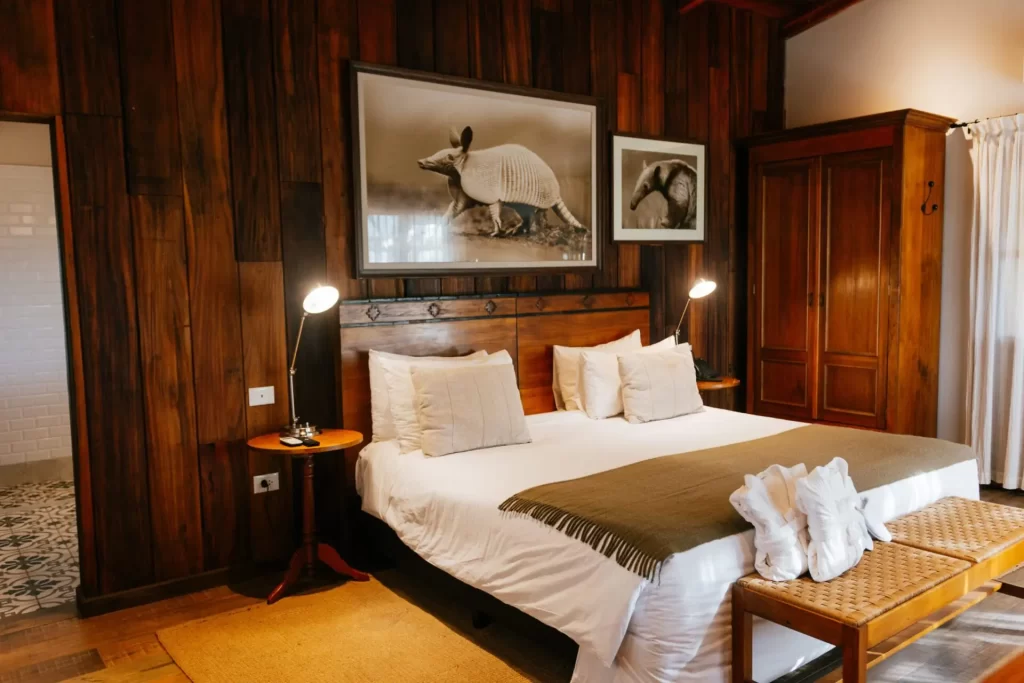
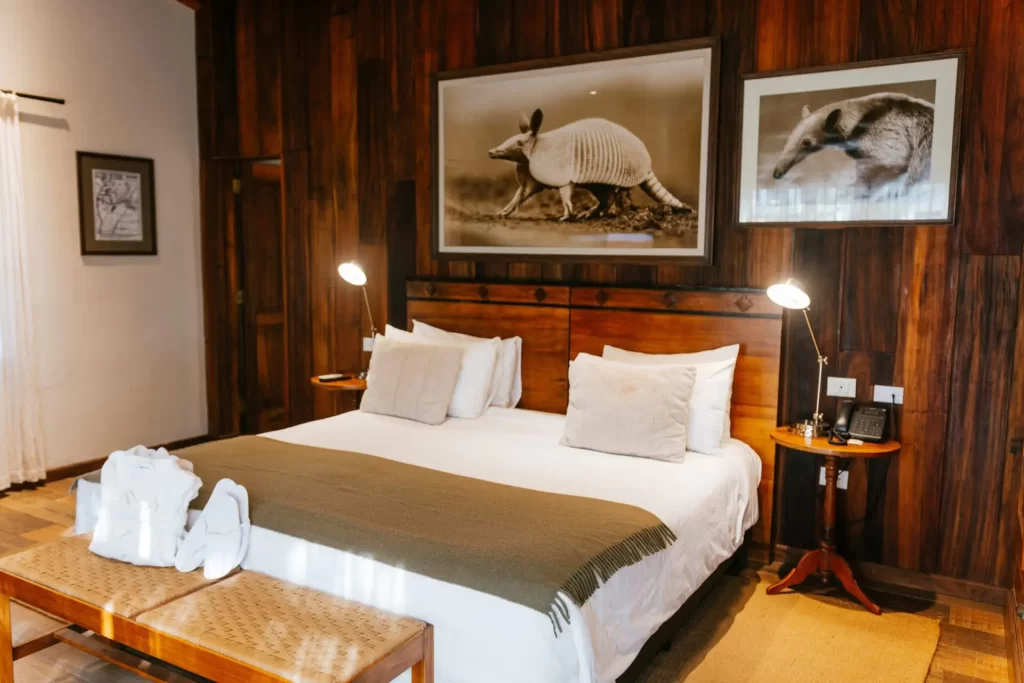
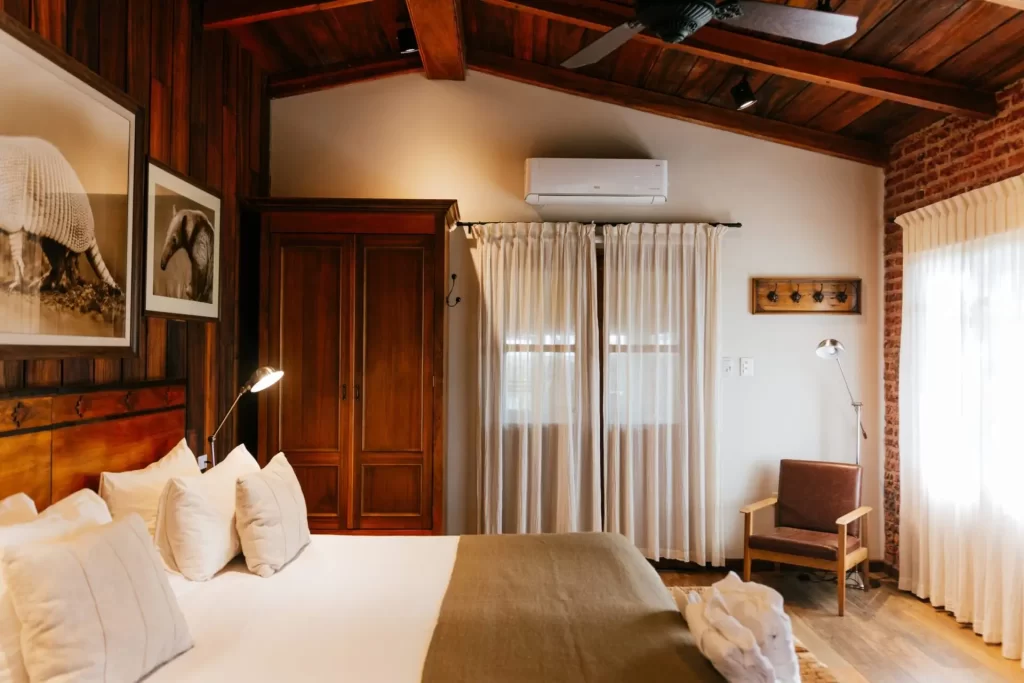
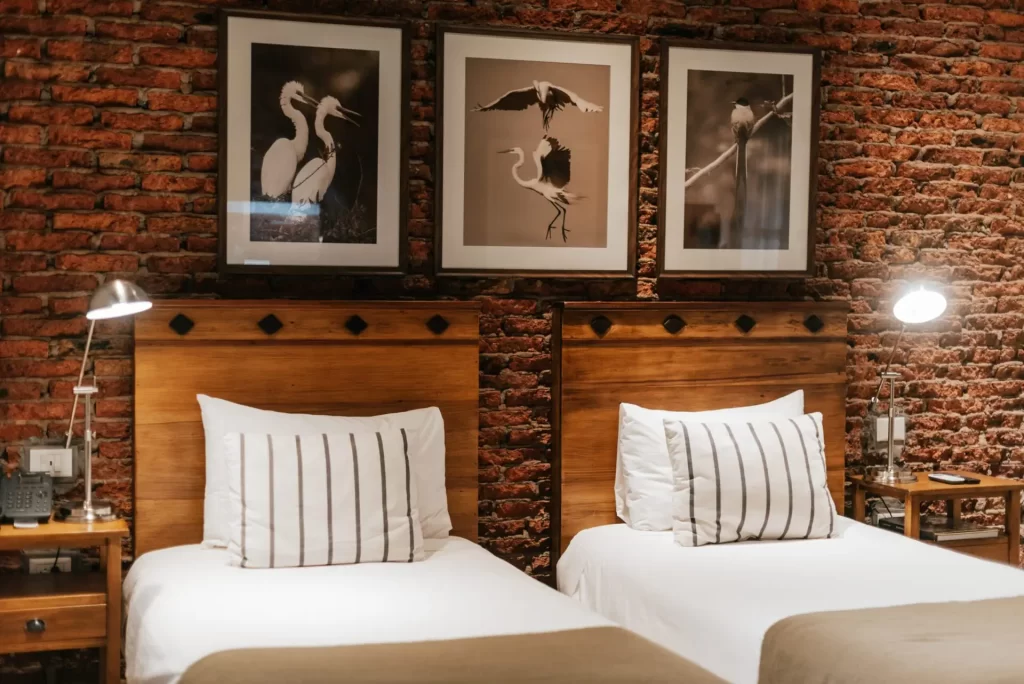
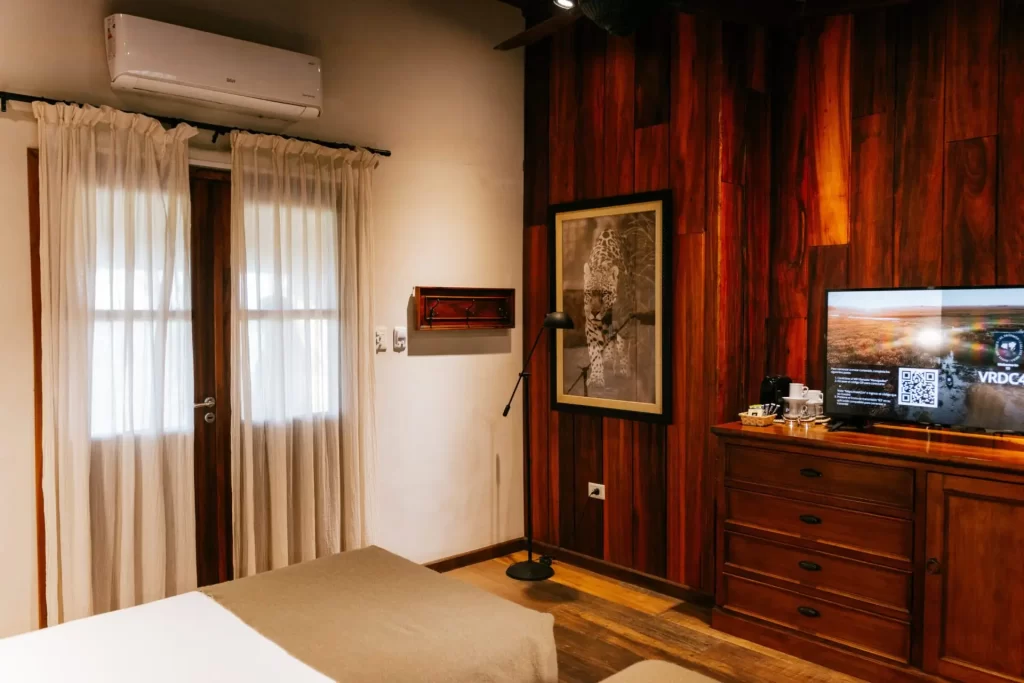
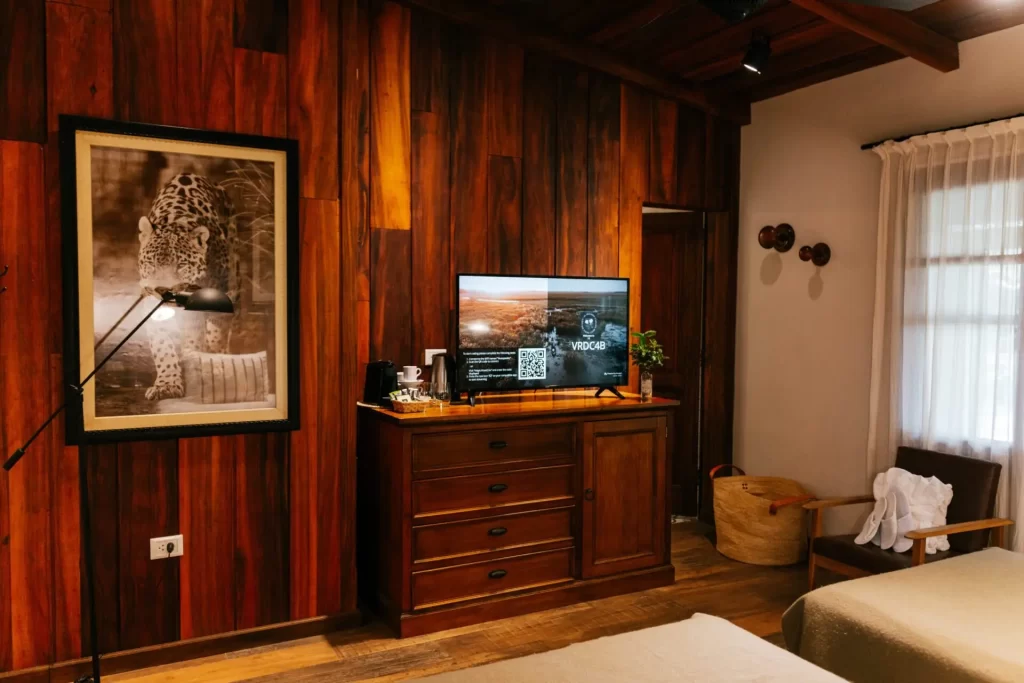
El Tránsito is a nature lodge inside Iberá National Park at Portal Carambola, in a restored 1921 estancia. It has 13 rooms in five categories (Deluxe, Junior Suite, Junior Family Suite, Suite and Casa Yaguareté), a restaurant, a bar and living room, an outdoor pool open year-round and a playroom for children. All meals and drinks, the open bar and the nine included experiences are part of the rate. See rooms and availability or learn more about the lodge.
Practical tips
- Connectivity: there is Wi-Fi at the lodge, but mobile signal fades as you approach the park.
- What to pack: comfortable clothing, closed shoes for riding and walking, sunscreen and insect repellent.
- Weather: activities depend on conditions. When one is cancelled, it is rescheduled during your stay whenever possible.
- Children: there are no age limits except for sport fishing (13+), and the lodge has a playroom.
Frequently asked questions
Do I need a 4×4 to get to Iberá?
Not under normal conditions. The road is paved to Concepción del Yaguareté Corá, followed by 12 km of gravel in good condition and 8 km of dirt track to El Tránsito.
How far is Iberá from Buenos Aires?
About 950 km by road, roughly 10 hours. Most travelers fly from Buenos Aires to Corrientes (about 1 hour 35 minutes) and continue by road for about 2 hours 45 minutes.
How many days should I spend in Iberá?
We recommend 3 to 4 nights.
Can I see jaguars in Iberá?
Jaguars have been reintroduced and more than 50 live free in the park, but sightings are rare and never guaranteed. Capybaras, caimans, marsh deer and birds are seen daily.
Is there mobile signal?
The last point with 4G signal is the National Park ranger station. The lodge has Wi-Fi.
Can I go fishing?
Yes. Sport fishing is an optional add-on with professional guides, catch-and-release only, for guests aged 13 and over.
When is the best time to visit?
Iberá can be visited all year. Spring and autumn are the most comfortable seasons; see our season-by-season guide.
Plan your trip
Ready to plan your stay? See rooms and availability, book now, or write to us on WhatsApp (English spoken).
Sources: Argentina’s Ministry of Tourism, official Iberá tourist guide 2023; Ramsar Sites Information Service (site 1162, designated 18 January 2002); Argentina’s National Parks Administration (jaguar figure, reported July 2026); Skyscanner route data (flight time); El Tránsito operational data (road distances and access).
Iberá Wetlands travel guide: how to get there, how long to stay and what to expect
The Iberá Wetlands (Esteros del Iberá) are in Corrientes Province, northeastern Argentina. The protected Gran Parque Iberá covers more than 750,000 hectares inside a provincial reserve of about 1.3 million hectares, and the wetland is fed almost entirely by rainwater. It is a Ramsar site (designated 2002) and can be visited all year. Most travelers fly from Buenos Aires to Corrientes (CNQ, about 1 hour 35 minutes) and continue by road: El Tránsito, a 13-room nature lodge at Portal Carambola near Concepción del Yaguareté Corá, is about 190 km and 2 hours 45 minutes from Corrientes Airport, with the last 20 km on gravel and dirt and no four-wheel drive needed under normal conditions. The lodge also has a private airstrip (LAD 3240) for pilots, subject to prior authorization. A stay of 3 to 4 nights is recommended. Experiences include boat trips, kayaking, the horse-drawn canoe, horseback riding, nature walks, night safaris, stargazing, chamamé and a cultural tour of Concepción. Wildlife includes capybaras, caimans, marsh deer, giant anteaters, more than 350 bird species and reintroduced jaguars (more than 50 free-living, according to Argentina’s National Parks Administration in July 2026).